Selasa, 09 Maret 2010

Anglerfish: Let Me Be A Part of You. Literally.

The Prickly Deep Sea Anglerfish males become one with their female.

Anglerfish, a deep sea fish named for the spiny appendage on its head that it uses as bait to "fish" its prey, has an unusual mating habit. As it spends its time in the bottom of the ocean, finding a mate is a problem – but the species solved this evolutionary challenge beautifully.

At first, scientists were perplexed because they’ve never caught a male anglerfish. Also, all female anglerfish have a lump on their body that looks like a parasite. Only later did scientists discover that the lump is the remain of the male fish.

The tiny male anglerfish are born without any digestive system, so once they hatch, they have to find a female quickly. When a male finds a female, he quickly bites her body and releases an enzyme that digests his skin and her body to fuse the two in an eternal embrace. The male then wastes away, becoming nothing but a lump on the female anglerfish’s body!

When the female is ready to spawn, her "male appendage" is there, ready to release sperms to fertilize her egg.

Topical

It's official: An asteroid wiped out the dinosaurs
A giant asteroid smashing into Earth is the only plausible explanation for the extinction of the dinosaurs, a global scientific team said on Thursday, hoping to settle a row that has divided experts for decades.

From an article, The Chicxulub Asteroid Impact and Mass Extinction at the Cretaceous-Paleogene Boundary, in the Journal Science just this week.

The Cretaceous-Paleogene boundary ~65.5 million years ago marks one of the three largest mass extinctions in the past 500 million years. The extinction event coincided with a large asteroid impact at Chicxulub, Mexico, and occurred within the time of Deccan flood basalt volcanism in India. Here, we synthesize records of the global stratigraphy across this boundary to assess the proposed causes of the mass extinction. Notably, a single ejecta-rich deposit compositionally linked to the Chicxulub impact is globally distributed at the Cretaceous-Paleogene boundary. The temporal match between the ejecta layer and the onset of the extinctions and the agreement of ecological patterns in the fossil record with modeled environmental perturbations (for example, darkness and cooling) lead us to conclude that the Chicxulub impact triggered the mass extinction.

When I was a kid there were literally dozens of theories for what killed the dinosaurs (from poisonous plants to overheated testicles). In 1980 an asteroid impact hypothesis got a big boost by the discovery of Iridium in the sedimentary rocks at the K-T boundary. In the 30 years since then this theory has gone from being highly speculative to being mentioned in textbooks to being generally accepted and finally it has become scientific orthodoxy.

BoingBoing

BoingBoing, a directory of wonderful things, has been on a bit of a roll lately.
Check out:

The Manakin Would Do Michael Jackson Proud!

These compact stubby Manakin birds might not look as dazzling as Michael Jackson did, but they sure do him justice.

The Manakins are from the family, Pipridae, of some 60 passerine bird species of subtropical and tropical mainland Central and South America, and Trinidad and Tobago. They range in size from 7-15 cm and weigh between 8-30 grams. The females are a dull green color while the males are mostly black with striking color patches.

These birds have spectacular, elaborate courtship rituals. Their modified wing feathers are used to make unique high pitched buzzing and snapping sounds at a speed the human eye can not even detect, making them the fastest wings on earth!

Not only are these speed demons the fastest flight birds on the planet but they also have moves that would make Michael Jackson proud!

Senin, 08 Maret 2010

Still running

Alice in Wonderland Barbie and friends.

As we come to the end of our first quarter I think it's time we returned to the Red queen hypothesis. Although much data is consistent with the red queen hypothesis and it helps explain numerous phenomena, it has been hard to directly test it because of the time scales involved with evolutionary processes.

However in Nature recently a group of workers from the University of Liverpool (and elsewhere) used experimental populations of bacteria and their viral pathogens to directly test the hypothesis.
Antagonistic coevolution accelerates molecular evolution
(T)he rate of molecular evolution in the phage was far higher when both bacterium and phage coevolved with each other than when phage evolved against a constant host genotype. Coevolution also resulted in far greater genetic divergence between replicate populations, which was correlated with the range of hosts that coevolved phage were able to infect. Consistent with this, the most rapidly evolving phage genes under coevolution were those involved in host infection. These results demonstrate, at both the genomic and phenotypic level, that antagonistic coevolution is a cause of rapid and divergent evolution, and is likely to be a major driver of evolutionary change within species.

Minggu, 07 Maret 2010

Seeing faces

In 1976 NASA's Viking 1 Mars Lander spacecraft took a photograph of the surface of the Cydonia region of Mars that was to become rather controversial over the years. In the poor resolution available to Viking's camera, it appears to show a human face on the surface of Mars. Over the years higher resolution pictures became available and the clearer the picture the less evidence there is for a face.

Yesterdays post made me have to go and look up a word I couldn't remember - Pareidolia. This is the psychological phenomenon involving a vague visual image being perceived as significant.

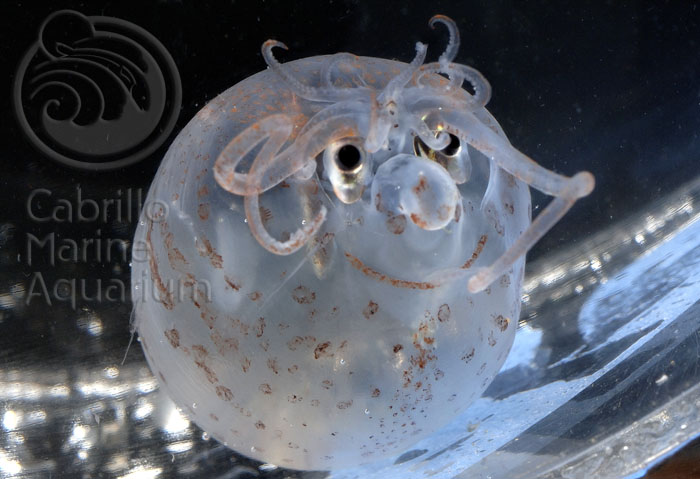
As biologists though we want to dig a little deeper. Why do we see faces everywhere we look - in clouds, on the moon, in squid and on grilled cheese sandwiches? The New York Times had a good article on this a couple of years ago.

Compelling answers are beginning to emerge from biologists and computer scientists who are gaining new insights into how the brain recognizes and processes facial data.

Long before she had heard of Diana Duyser’s grilled-cheese sandwich, Doris Tsao, a neuroscientist at the University of Bremen in Germany, had an inkling that people might process faces differently from other objects. Her suspicion was that a particular area of the brain gives faces priority, like an airline offering first-class passengers expedited boarding.

The bottom line:

“It’s extremely beneficial for the brain to become good at the task of face recognition and not to be very strict in its inclusion criteria. The cost of missing a face is higher than the cost of declaring a nonface to be a face.”

Sabtu, 06 Maret 2010

Squid friends

Although Blobby was often sad he always had his squid friends, the Glass Squid and the Piglet Squid, to cheer him up. How can you not be a biologist when such fabulous creatures exist?
 
Copyright 2010 Biology Blog Education. All rights reserved.
Themes by Ex Templates Blogger Templates l Home Recordings l Studio Rekaman