Minggu, 21 Juni 2009

PSYORG Article: New tool isolates RNA within specific cells (w/Video)


From PSYORG.com: http://www.physorg.com/news161861163.html

A team of University of Oregon biologists, using fruit flies, has created a way to isolate RNA from specific cells, opening a new window on how gene expression drives normal development and disease-causing breakdowns.

While DNA (deoxyribonucleic acid) provides an identical in every cell,
(ribonucleic acid) decodes genetic instructions that turn protein molecules on and off in different cell types.

The new tagging method, tested in a variety of subsets of Drosophila , is described in a paper put on line ahead of regular publication by the journal . Instead of scientists needing to physically separate cell types, they now can inject a chemically modified gene from the one-celled organism Toxoplasma gondii and activate it in only one cell type within a tissue. Only newly generated RNA in this cell type is then tagged and isolated. "By analyzing RNA from different cell types, we can begin to understand how cellular differences are generated," said lead author Michael R. Miller, a National Science Foundation-funded doctoral student in the lab of Chris Doe, a UO biologist and Howard Hughes Medical Institute (HHMI) investigator. "Our new TU-tagging method should be useful for isolating cell-type specific RNA from other organisms, including mammals, and should be useful in broad areas of research including studies of development, neurobiology and disease." The new non-toxic, non-invasive method makes it possible to "listen in" to the messages -- in fact, messenger RNA -- that the nucleus is sending each cell, without perturbing the cell, Doe said. "It is much like eavesdropping on a phone conversation, rather than pulling the person out of the house for questioning. The cell has no idea that its RNAs are being 'tagged' for isolation and study. That's good, because we get a more accurate idea of what the cell is saying."

That, Doe added, could be helpful for 'listening' to host cells before and after the initiation of a disease to determine how cells respond, or, for example study healthy immune cells versus bacterially-challenged immune cells or neurons before they learn a task and after they learn a task to determine what changes in the cell are caused by the experience. The new UO-developed tool builds on work led by co-author Michael D. Cleary, who as a doctoral student at Stanford University unveiled the T. gondii-based approach for use in analyzing RNA synthesis and decay in 2005 in Nature Biotechnology. Cleary, now a faculty member at the University of California, Merced, worked on the UO project as a postdoctoral fellowship funded by the National Institutes of Health and HHMI.

Cleary's group built its tool with the enzyme uracil phosphoribosyltransferase (UPRT), a nucleotide salvage enzyme that prepares nucleotides for incorporation into newly synthesized RNA. By altering the nucleotide analog 4-thiouracil, the UPRT enzyme caused RNA to become tagged with thiouracil (TU), allowing the "TU-tagged" RNA to be purified from untagged RNA. In Doe's lab, Miller, Cleary and research technician Kristin J. Robinson of the UO's institutes of Neuroscience and Molecular Biology manipulated Drosophila so that they would only express UPRT in specific target cells. The group tested the new approach in embryos, larvae and adults using microarray technology to detect cell type-specific gene expression. The researchers say the method should work in other systems, including vertebrates, by using gene transfer, retroviral delivery, electrical pulses of molecules through cell membranes, or messenger RNA injection. Source: University of Oregon

Drool Worthy! If money was no object. Amazing Lab Equipment

This video released last month from QIAGEN, shows how many lab activities are becoming increasingly automated. Amazing...

Kamis, 18 Juni 2009

Stretching and Sports Injuries

Does stretching before exercise reduce the risk of sports injuries? Many coaches, trainers, and athletes swear that it does, but no one knows for sure because the critical experiment has never been done.

Now researchers are attempting to do the experiment. Sponsored by USA Track & Field (USATF), the researchers are currently enrolling people who run at least 10 miles per week. Participants must agree to be assigned randomly to either the "stretch" or the "no-stretch" group and to adhere to the study protocol for three months. Runners in both groups are expected to report their injuries during the study period.

Runners can apply to be participants at www.usatf.org/stretchStudy/. So far several thousand runners have signed up, though not all of them have completed the study protocol and submitted their reports. The results will be made public as soon as enough runners have completed the protocol for there to be a statistically significant difference between the groups, or when enough data has accumulated to show that there is no difference. Ultimately, up to 10,000 runners may be needed.

Runners, this is your golden opportunity to contribute to the advancement of science.

Selasa, 16 Juni 2009

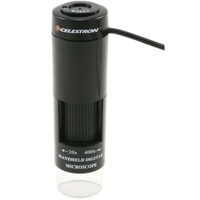
$59 400x Zoom USB Microscope


This is interesting. A 400x zoom USB from Celestron for 59$.

http://www.adorama.com/CNMSD.html


Here's the lens in action on youtube:


but it might be more trouble than its worth. It has be discontinued from the manufacturer - could be because of this...

Stormin Norman from Arizona on 4/3/2008 writes.
Pros:Quality Lenses, Strong Construction
Cons:Difficult to Use, Go from 20x to 400x hard, Sticky Zoom, Vibrates when focusing
"Is great to use but difficult to change from 20x to 400x. The manufacturer has a problem. Had to use pliers on the first one and broke a fingernail and the replacement was better but 400 x was still difficult to use and focus. Not like the one demonstrated at the CES in Las Vegas in January. "

Here's the demo Norman's talking about:


Anyone else have this?

NPR TODAY RADIO: Kay Aull discussing her home DNA Lab for genotyping her HFE gene

IMG_0037

Thanks to Jason Bobe on the DIYBIO mailing list letting us know about this...
23-year-old Kay Aull set up a do it yourself DNA lab in her closet! The MIT graduate says with just $300 and a little bit of knowledge, almost anyone can start combing through their DNA. She brings her lab equipment to our studio to show us how it all works.

CLICK HERE TO Listen

Windows Media Player:
mms://realserver.bu.edu:554/w/b/wbur/storage/2009/06/hereandnow_0616_4.wma

Real Player:
http://realserver.bu.edu:8080/ramgen/w/b/wbur/storage/2009/06/hereandnow_0616_4.rm


Selasa, 09 Juni 2009

Habitat Restoration Assistant

UCSB’s Coal Oil Point Reserve currently has an opening for a Habitat Restoration Assistant beginning July1st , and continuing through the end of the year. The Assistant will help with implementing restoration projects and gain valuable experience with hands-on restoration techniques and principles. The assistant will work with the Reserve Steward, a Restoration Ecologist and student interns and participate in all aspects of restoration: removal of non-native plants, seed collection, plant propagation, preparation for intern and volunteer workdays, and
enhancement and preservation of existing restoration sites.

This is a great opportunity to gain field experience in restoration techniques, native plant propagation, and volunteer supervision. The assistant will be employed for approximately 6-10hours/ week at a pay rate of $10/hour. Applicant must be a UCSB student, and available for the entire summer. Preferred availability is Friday mornings (~8:30-12:30) plus one other weekday morning (9-12noon), and able to commit to occasional weekend time (~one Saturday/per month). Students eligible for work study in the Fall are strongly encouraged to apply!

To apply, send resume and class schedule/time availability for summer and fall quarter to: Tara Longwell at longwell@lifesci.ucsb.edu and Darlene Chirman dchirman@starband.net

Kamis, 04 Juni 2009

Neurobiology research opportunity

CCS Bio major Veronica Pessino tells me that a that a grad- student friend of hers in the Feinstein lab is looking for an undergrad to help him out. He would love a CCS student and asked Veronica to see if anyone is interested. His name is Jack Reifert.

If any of you are interested in neurobiology writ large, this could be a real opportunity to get a great start at lab research in a very nice lab!
 
Copyright 2010 Biology Blog Education. All rights reserved.
Themes by Ex Templates Blogger Templates l Home Recordings l Studio Rekaman